


 Go back
Bookbinding materials: products and accessories for professional projects
From the structure to the covering, through to gluing, fastening and binding systems: bookbinding supplies and how to choose them.
A bookbinding project is born from the balance between structure, covering, adhesive and assembly system. Each component contributes to the quality of the final result and must be chosen according to the substrates, the planned processes and the application. To meet the different needs of the sector, Cavallini offers cardboard, covering materials, glues, fastening systems, mechanisms and accessories, providing solutions for every type of project.
How to choose materials for bookbinding and professional projects?
To identify the most suitable solutions, it is useful to consider:
- Type of project: whether it is a sewn softcover, a fine edition or a complex die-cut, the definition of the project determines the choice of materials and ensures the best technical result.
- Budget: defining the budget is the first step in understanding which materials to select. Spending has a direct impact on the look and wear resistance of a package or a book.
- Structure and format: size, grammage and thickness determine the choice of cardboard, covering and other products that complete the project, such as screws, magnets, rivets and eyelets.
- Materials to be laminated: paper, cloth and other coverings react differently when glued to cardboard.
- Printing techniques: hot foil stamping, screen printing, UV offset and digital printing require coverings that are compatible with the planned process.
- How it will be used: a sample book intended for frequent consultation requires different characteristics from a book cover.
- Aesthetic result: colour, surface and finish should be considered together with the technical aspects, striking the right balance between appearance, workability and functionality.
The role of cardboard in the structure and visual identity
In many bookbinding and paper converting processes, cardboard is both the structural base and an element that can become the finished package itself. Thickness, composition and grammage affect the stability of the final product and its compatibility with coverings and subsequent processes. Depending on the project, you can choose between single-ply, laminated and solid board. Solid board is particularly suitable for uncovered projects, where the core and colour of the board remain visible and become part of the final look. The range also includes E-flute corrugated board and single face corrugated board.
Coverings: appearance, price and compatibility with processing
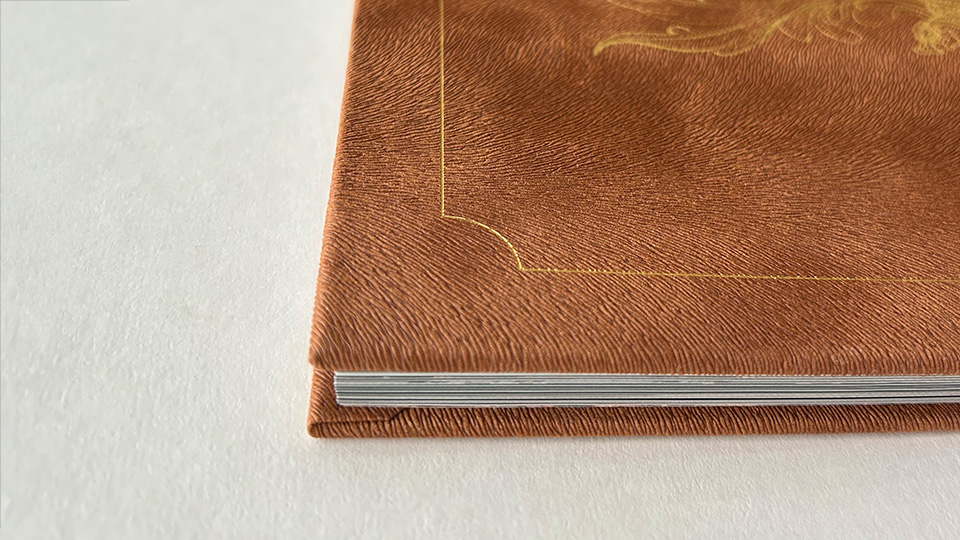
Cloths, papers, flocked materials and coated materials define the visual and tactile impact of the project through colours and finishes. The choice must balance the cost of the material with the requirements of subsequent processes, such as printing. A coated material, for example, is a more affordable alternative to cloth, whose weaves are more complex to produce. Our range of covering materials is available in the catalogue in sheets or rolls, depending on the type of product.
Bookbinding glues and adhesives
The glue should be selected according to the materials to be joined, the application method and the required performance, such as setting speed. An absorbent material, for example, requires different characteristics from coated, varnished or laminated papers. We supply PVA glues, hot melt adhesives, animal glues, glue sticks, double-sided tapes and glue dots for applications such as casing-in, spine lining, laminating, padding and spine gluing.
Solutions for ring binders
Making a binder requires components suited to the format, the thickness of the contents and the way it will be consulted. Ring mechanisms, which we covered in a dedicated article, make it easy to organise, add or remove sheets and materials. Rivets and eyelets are some of the catalogue products that complete our range of solutions for making ring binders.
Materials for sample books
Hooks, sample rings and screws offer different ways of presenting samples. Hooks make it possible to hang materials on racks and displays, while sample rings in various shapes and diameters allow them to be grouped and consulted with ease. Our range of binding screws includes nickel-plated, brass-plated, black epoxy, solid brass and plastic finishes, which can also be painted. The different lengths, from 2 to 150 mm, and the extensions make it possible to adapt the system to the thickness of the sample book.
Magnetic closures for design projects
Magnets can be built into rigid boxes, gift boxes and folders to create functional closures, which are particularly suitable when the closure system also contributes to the look of the project. In addition to the disc magnets and rectangular magnets available in our catalogue, we can supply neodymium magnets in different sizes and grades, according to the requirements of the project.
Elastic bands and decorative cords for closing and customising projects
Elastic bands and cords complete and enhance folders, sample books, boxes and shopping bags with details and colours that become part of the design. In addition to catalogue products such as round elastic bands, flat elastic bands with metal tips and twisted cords, we supply other variants on request in custom colours, sizes and diameters.
Bookbinding products and accessories
Accessories complete the project by adding practical functions and finishing details. Metal corners, tapes and bookmark ribbons, plastic pockets and handles help to protect, close and organise books, binders, catalogues and sample books, or make them easier to consult.
Choosing materials for a bookbinding project? Contact us to find out more about the available solutions and the products best suited to your needs.
